


Tanzanite: The Gemstone Discovered In Our Lifetime
Tanzanite Durability: The "Special Occasion" Treasure
Tanzanite is a variety of the mineral zoisite. While it possesses breath-taking beauty, it requires more mindful care than harder stones like sapphire or ruby.
Hardness: Rated 6 to 7 on the Mohs scale. It is durable enough for jewellery
Resilience: Due to its "perfect cleavage," tanzanite is sensitive to sudden impacts and extreme temperature shifts.
Best Use: It is ideal for tanzanite necklaces and earrings. For rings, protective settings like bezels are recommended to ensure the stone’s longevity.
Rare Origin and Maasai Legends
Tanzanite’s story began in 1967 in the Merelani Hills of Tanzania, the only place on Earth where it is mined. This singular source makes it one of the most exclusive collector's items in the world.
The Legend of Fire: Maasai lore tells of a lightning strike that set the hills ablaze, transforming dull crystals into shimmering violet-blue gems.
Symbolism: Traditionally gifted to Maasai women after childbirth, the stone symbolizes new beginnings, health, and prosperity.
The Tiffany Legacy: It gained global fame after being branded by Tiffany & Co. as the "gemstone of the 20th century."
Grading Tanzanite: Color and Value
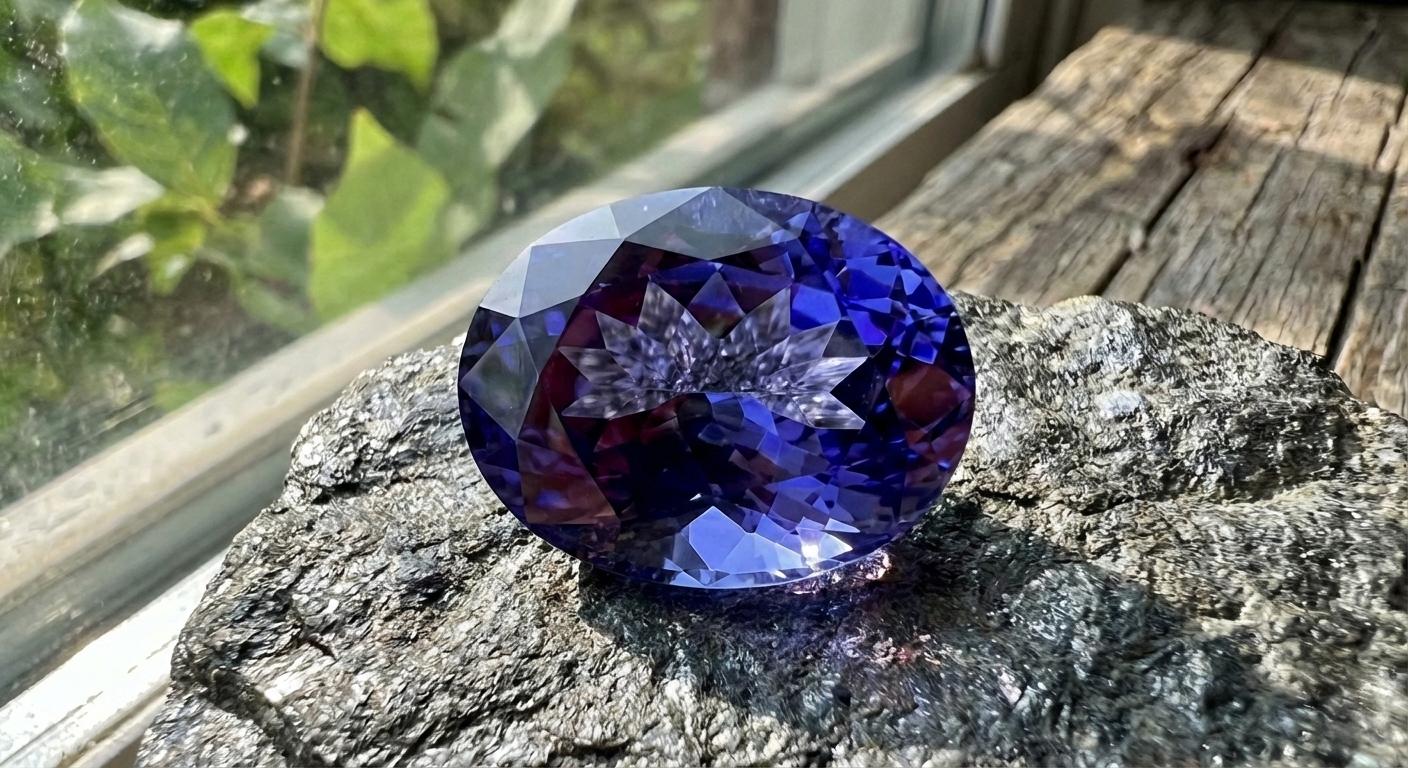
The value of a tanzanite is primarily determined by its color saturation and trichroism—the ability to show different colors (blue, violet, and burgundy) from different angles.
Vivid Blue (vB) vs. Intense Violet (vI): The most valuable stones feature "Exceptional" saturation. Deep, "vivid" blues are often the most sought-after, while stones with a strong violet flash offer a more ethereal, royal look.
Trichroic Nature: High-quality cuts showcase a "red flash"—hints of burgundy that appear under incandescent light, a hallmark of premium tanzanite.
D Block Quality: Stones sourced from "D Block" are legendary among collectors for their unparalleled size and intense, velvety color.
